
Local
Optimizing Laundry Venting in Brooklyn Brownstones
October 4, 2026
You are living in a meticulously restored 19th-century brownstone in Park Slope or Bedford-Stuyvesant. While the original moldings and high ceilings are stunning, the laundry setup often feels like an afterthought. You notice your dryer takes three cycles to finish a load of towels, and the small laundry closet feels like a sauna every time the machine runs.
Does the original architecture of your home prevent proper airflow? Is the lint buildup inside your walls creating a silent hazard? How can you modernize a venting system that was never designed for high-capacity modern appliances?
Managing a Brooklyn brownstone dryer vent requires balancing the preservation of historic masonry with the heavy demands of modern laundry technology.
The Architecture of Obstruction
In many Brooklyn brownstones, the laundry room is not located against an exterior wall. Instead, it is often tucked into a central closet or a basement nook. This requires a long, complex duct run to reach the outside of the building. Because these structures were built long before modern building codes, the ducts often snake through narrow floor joists or old chimney flues, creating numerous 90-degree turns.
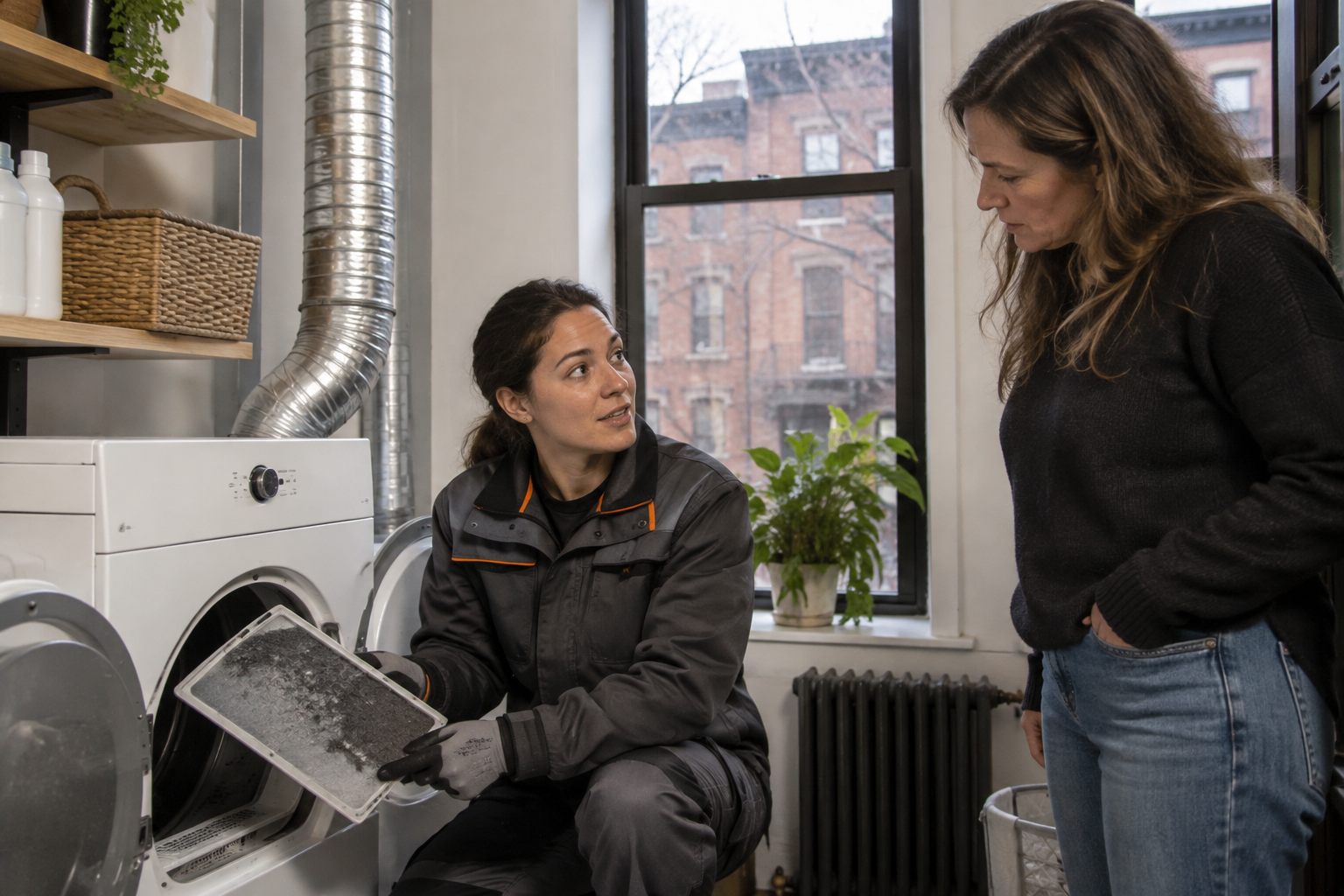
Every turn in a duct increases resistance and gives lint a place to settle. In a typical residential setting, a straight vent is easy to clear, but the vertical climbs found in four-story brownstones allow gravity to pull lint back down into the machine. This buildup restricts airflow, forcing the dryer’s heating element to work harder and run longer, which eventually leads to mechanical failure.
Masonry and Exterior Vent Termination
One of the most common issues we see in Brooklyn involves the exterior exit point of the vent. In historic districts, you cannot simply cut a large hole in a landmarked facade. Consequently, many vents are routed through existing basement windows or terminated in awkward locations near the ground.
Dryer vent problem? Talk to a technician today.
If the exterior vent cover is poorly positioned, it can become blocked by debris, snow, or even neighborhood pests seeking warmth. A blocked exterior flap causes heat and moisture to back up into the ductwork. If you are using a gas appliance, this restriction is particularly dangerous as it can lead to the backup of combustion byproducts. Understanding gas dryer venting and carbon monoxide safety in NYC buildings is critical for any brownstone owner to ensure the living space remains ventilated and safe.
The Risk of Hidden Lint Buildup
Because brownstone ducts are often hidden behind plaster and lath or modern drywall, a leak or a disconnection in the venting line can go unnoticed for years. When a vent pipe separates inside a wall, the dryer pumps hot, moist air and highly flammable lint directly into the building's structure.
According to the U.S. Fire Administration, failure to clean the dryer vent is the leading cause of home clothes dryer fires. In the context of a wood-framed Brooklyn rowhouse, a fire starting inside the walls can spread rapidly to adjacent properties. Regular inspections are not just about appliance efficiency; they are a necessary part of fire prevention for the entire block. Property owners who manage multiple units or a commercial space must be especially diligent, as the volume of laundry increases the speed of lint accumulation.
Solutions for Old Building Ducts
Modernizing your Brooklyn laundry venting doesn't always require a full renovation. There are several ways to improve performance in an old building:
- Transition to Rigid Metal: Replace flexible foil or plastic transition hoses with rigid metal ducting. Rigid walls minimize friction and give lint fewer places to snag.
- Booster Fans: For very long runs—common in deep brownstones—an inline booster fan can help maintain the necessary velocity to carry lint all the way to the exterior exit.
- Routine Professional Clearing: Because of the complex turns in these buildings, DIY vacuum attachments often fail to reach the deep clogs. Professional equipment can navigate multiple bends to ensure the path is clear.
- Seal and Secure: Ensure all joints in the ductwork are sealed with aluminum foil tape rather than standard duct tape, which dries out and fails under high heat.
If you are noticing a musty smell in the laundry area or if the top of your dryer is hot to the touch, the system is likely failing to exhaust properly. While these buildings were built to last for centuries, their mechanical systems require consistent maintenance to handle 21st-century life.
DVC Experts Inc. has 25+ years of experience navigating the specific architectural challenges of New York City homes. Whether you are in a historic house or a modern manhattan high-rise, our team understands how to keep your laundry system running safely.
To schedule an inspection of your brownstone dryer vent or to clear a persistent blockage, contact DVC Experts Inc. at 1 718-305-7888 or visit our /contact page. Our office is located at 509 Dahill Rd, Brooklyn, NY 11218.
Dryer vent problem? Talk to a technician today.
Related articles
- Dryer Vent vs. Air Duct Cleaning: Understanding the Difference
- Multi-Family Dryer Vent Maintenance for NYC Property Managers
- Dryer Vent Cleaning for NYC New Parents
Need help at home? See our residential dryer vent cleaning.