
Advice
Dryer Vent Cleaning After NYC Home Flooding
October 19, 2026
You return to your basement apartment in Queens or your Brooklyn garden-level flat after a heavy summer downpour only to find three inches of standing water. While the immediate focus is often on the flooring and drywall, the mechanical systems behind the walls frequently take the brunt of the damage. For residents who have experienced a pipe burst or a flash flood, the dryer vent is a critical but often overlooked component of the recovery process.
Is a wet dryer vent a fire hazard once the water recedes? Can internal moisture lead to structural mold growth inside the wall cavity? How do you ensure the exhaust system is safe to operate before the next laundry day?
Water intrusion in a dryer vent creates a dangerous sludge of wet lint that restricts airflow and promotes rapid mold growth, necessitating a professional inspection before the dryer is used again.
The Problem with Wet Lint Sludge
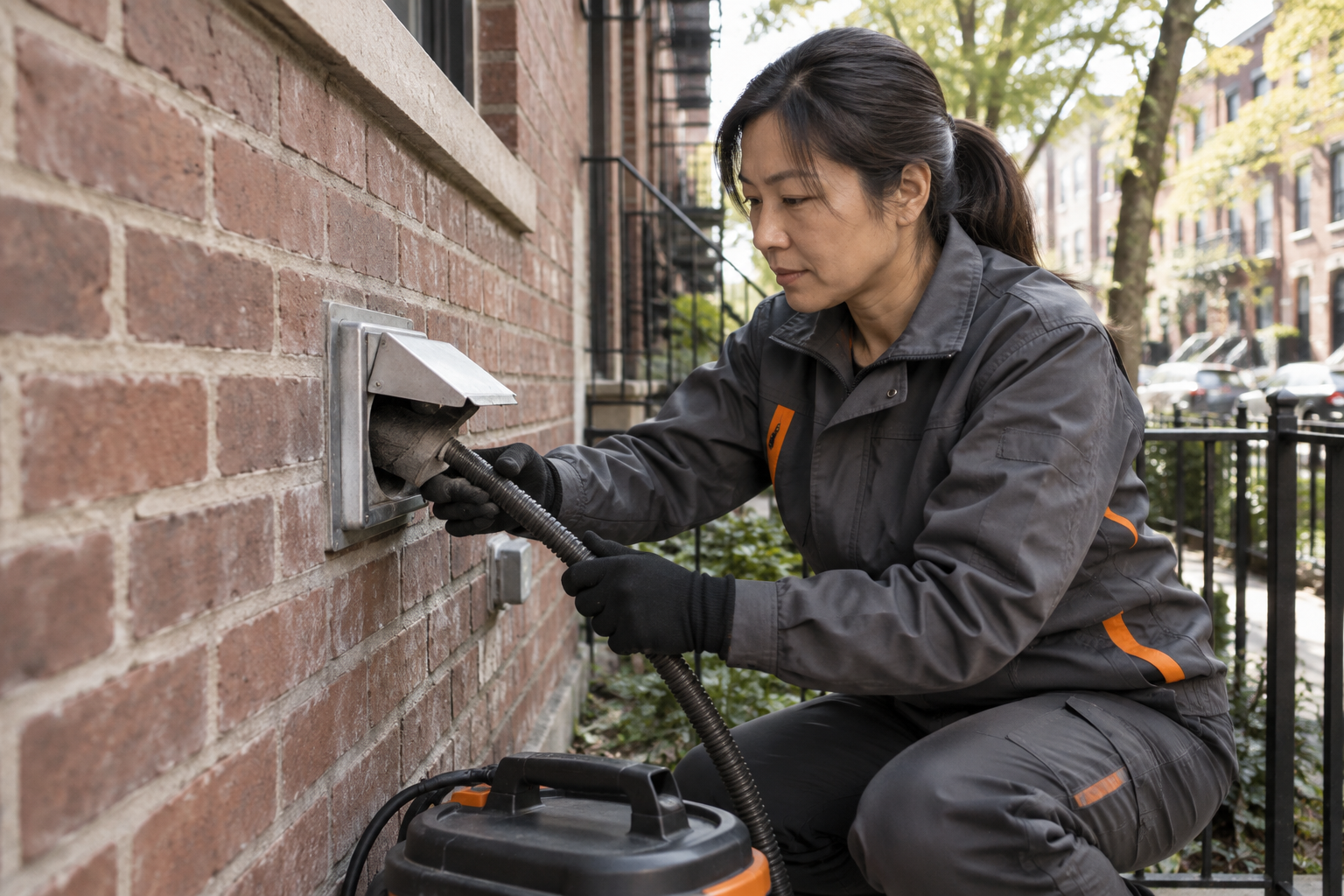
Dryer vents are designed to transport hot air and dry lint particles. When water enters the system—whether from a backup in a Brooklyn basement or a plumbing leak in a Manhattan high-rise—it saturates the existing lint buildup. This creates a heavy, paste-like sludge that adheres to the walls of the ductwork. Unlike dry lint, which can be moved by the dryer’s internal blower, this wet sludge stays put. As the dryer tries to force air through a narrowed, damp passage, the back pressure increases, leading to potential overheating of the heating element. A thorough residential cleaning is the only way to remove this heavy debris that air pressure alone cannot dislodge.
Mold Risks in Damp Ductwork
NYC apartments often suffer from poor ventilation in utility areas, making them prime environments for mold. If water remains trapped in the low points of a dryer vent, it provides the moisture necessary for mold spores to colonize the lint. Because dryer vents often run through joists or behind drywall, a moldy vent can distribute spores into the living area every time the machine runs. This is particularly problematic in complex setups where the ducting is lengthy. For those who recently completed planning new NYC dryer vent installations, a flood can compromise a brand-new system if the moisture is not addressed immediately. Professional cleaning ensures the interior surface of the duct is stripped of the organic material mold feeds on. We see the same pattern on the jobs we run in Queens.
Dryer vent problem? Talk to a technician today.
Mechanical Integrity and Insulation
Floodwater is rarely clean; it often carries silt, salt, and contaminants that can corrode flexible transition hoses and rigid metal ducts alike. In Long Island homes where vents might run through crawlspaces, the exterior insulation of the ductwork can become waterlogged, losing its R-value and causing condensation issues even after the floodwater is gone. Furthermore, if the dryer itself was partially submerged, the connection point where the dryer meets the wall must be inspected. Water can damage the seal, leading to leaks of carbon monoxide or moisture into the home. For building supervisors managing a commercial laundry room, a flood event requires a full system audit to prevent liability and equipment failure.
Post-Flood Recovery Checklist
If your laundry area has been exposed to water, follow these steps before resuming use of the appliance:
- Disconnect power to the dryer and shut off the gas valve if applicable.
- Inspect the transition hose (the piece connecting the dryer to the wall) for standing water or heavy sediment.
- Check the exterior vent hood for debris or silt blockage that may have floated in during a storm.
- Have a professional technician perform an airflow test to confirm the path is clear of wet lint obstructions.
- Replace any flexible foil or plastic ducting that has been submerged, as these materials are difficult to decontaminate.
DVC Experts Inc. brings 25+ years of experience to the restoration process for NYC residents. If your home or building has suffered water damage, contact us at 1 718-305-7888 or visit our /contact page to schedule an inspection and cleaning to ensure your exhaust system is safe and dry.
Dryer vent problem? Talk to a technician today.
Related articles
- Dryer Vent Safety for NYC Seasonal Residents
- Dryer Vent Cleaning for NYC New Parents
- Dryer Vent Cleaning for NYC Building Crews
Need help at home? See our residential dryer vent cleaning.