
How it works
Foil Versus Rigid Metal Duct: Which is Safer for NYC Homes?
September 20, 2026
You pull a load of towels out of the dryer in your Brooklyn brownstone only to find they are still damp after a full sixty-minute cycle. You reach behind the machine and feel a flimsy, silver accordion-style tube that is hot to the touch and pinched against the wall. This common setup is often the weak link in an otherwise functional laundry room. For many residents, the choice of venting material is an afterthought, yet it is the primary factor in how quickly your clothes dry and how safe your building remains.
Is that foil dryer duct actually approved for use in high-density housing? Does upgrading to a rigid metal duct really make a difference in drying time? How do you balance the need for flexibility in tight closets with the requirement for fire safety?
Choosing the correct venting material is the single most important factor in preventing lint accumulation and ensuring your dryer operates within safe temperature parameters.
The Hazards of Foil and Plastic Venting
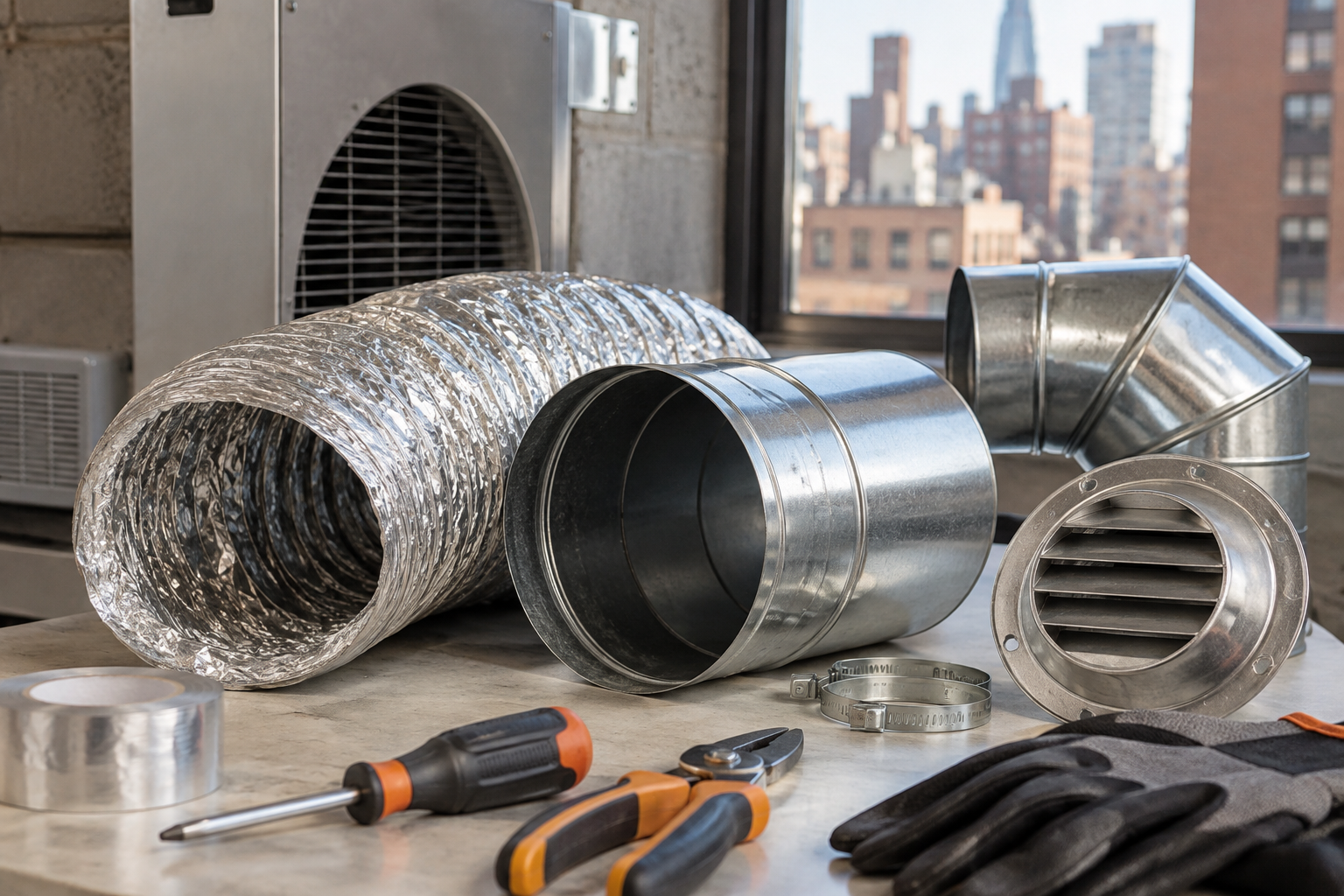
In many older apartments across Manhattan, it is common to find thin foil or even white plastic venting tucked behind appliances. These materials are popular because they are inexpensive and easy to install in cramped quarters. However, they present significant safety risks. Foil ducts are prone to kinking and crushing, which restricts airflow and causes the dryer to overheat.
Because the interior walls of a foil dryer duct are ribbed, they create turbulence. This turbulence traps lint in every crease. According to the U.S. Fire Administration, failure to clean the dryer vent is the leading cause of home clothes dryer fires. When a fire does start, thin foil or plastic provides no containment; the flames can easily melt through the material and spread into the wall cavity. For this reason, many building codes and manufacturers now prohibit the use of plastic or thin foil for the entire length of the vent run.
The Advantages of Rigid Metal Ductwork
For any residential application, rigid metal is the gold standard. These pipes are typically constructed from galvanized steel or aluminum. Unlike flexible options, the interior of a rigid pipe is smooth. This smoothness allows air to flow at maximum velocity, carrying lint all the way to the exit point without snagging on ridges.
Dryer vent problem? Talk to a technician today.
Rigid metal is also non-combustible. If a lint fire ignites within the pipe, the thick metal walls are designed to contain the heat long enough to prevent the fire from spreading to the surrounding studs and insulation. While rigid pipe is more difficult to install because it requires specific elbows and foil tape rather than plastic clamps, it is a permanent solution that rarely needs replacement unless physical damage occurs. It is particularly effective when navigating the complex layouts found in Long Island homes where the vent must travel through joists or crawlspaces.
Understanding the Semi-Rigid Transition Hose
There is a middle ground known as the semi-rigid transition hose. This is not the same as thin foil. It is made of a heavier, bendable aluminum that holds its shape better than foil but offers more flexibility than a solid pipe.
In New York City, where dryers are often squeezed into small closets, a transition hose is often necessary to connect the back of the dryer to the wall outlet. The key is that this material should only be used for the "transition"—typically limited to a length of eight feet or less—and must be visible. It should never be concealed inside a wall or ceiling. If your system requires a long run to reach the exterior, whether it is a roof vent vs. wall vent, that long hidden stretch must be rigid metal to meet safety standards.
Airflow Efficiency and Energy Costs
Beyond safety, the material choice directly impacts your monthly utility bills. A crushed foil duct forces the dryer motor to work harder and run longer. In a commercial setting like a laundromat or a multi-family building in Brooklyn, this inefficiency scales quickly into significant overhead costs. Rigid metal maintains its diameter even under pressure, ensuring that moisture-laden air exits the building as fast as possible. This reduces wear on the dryer’s heating element and prevents the humid air from leaking into the laundry room, which can lead to mold and mildew issues.
Dryer Vent Material Checklist
If you are evaluating your current setup, use this framework to determine if an upgrade is necessary:
- Identify the material: If the duct is white plastic or thin, tissue-like foil, it should be replaced immediately with metal.
- Check for kinks: Look behind the dryer. If the hose is flattened to less than four inches in diameter, airflow is being choked.
- Assess the length: Ensure that flexible materials are only used for the short connection between the machine and the wall, never for the entire run.
- Inspect the joints: All metal joints should be sealed with UL-listed foil tape, never duct tape, which dries out and fails over time.
- Verify the exit: Ensure the rigid pipe terminates at a proper exterior hood that opens freely under air pressure.
At DVC Experts Inc., we have over 25 years of experience helping property owners choose the safest venting configurations for their specific layouts. We serve all five boroughs and Long Island, providing professional cleaning and inspection for both residential and commercial systems. If you are concerned about your dryer's performance or the safety of your venting material, contact us at 1 718-305-7888 or visit our /contact page to schedule a professional evaluation.
Dryer vent problem? Talk to a technician today.
Related articles
- Gas Dryer Venting and Carbon Monoxide Safety in NYC Buildings
- Dryer Vent Cleaning for NYC Pet Owners
- Dryer Venting in Condos and Co-ops: Determining Responsibility
Need help at home? See our residential dryer vent cleaning.