
Installation
Rerouting Badly Designed Dryer Vents
October 8, 2026
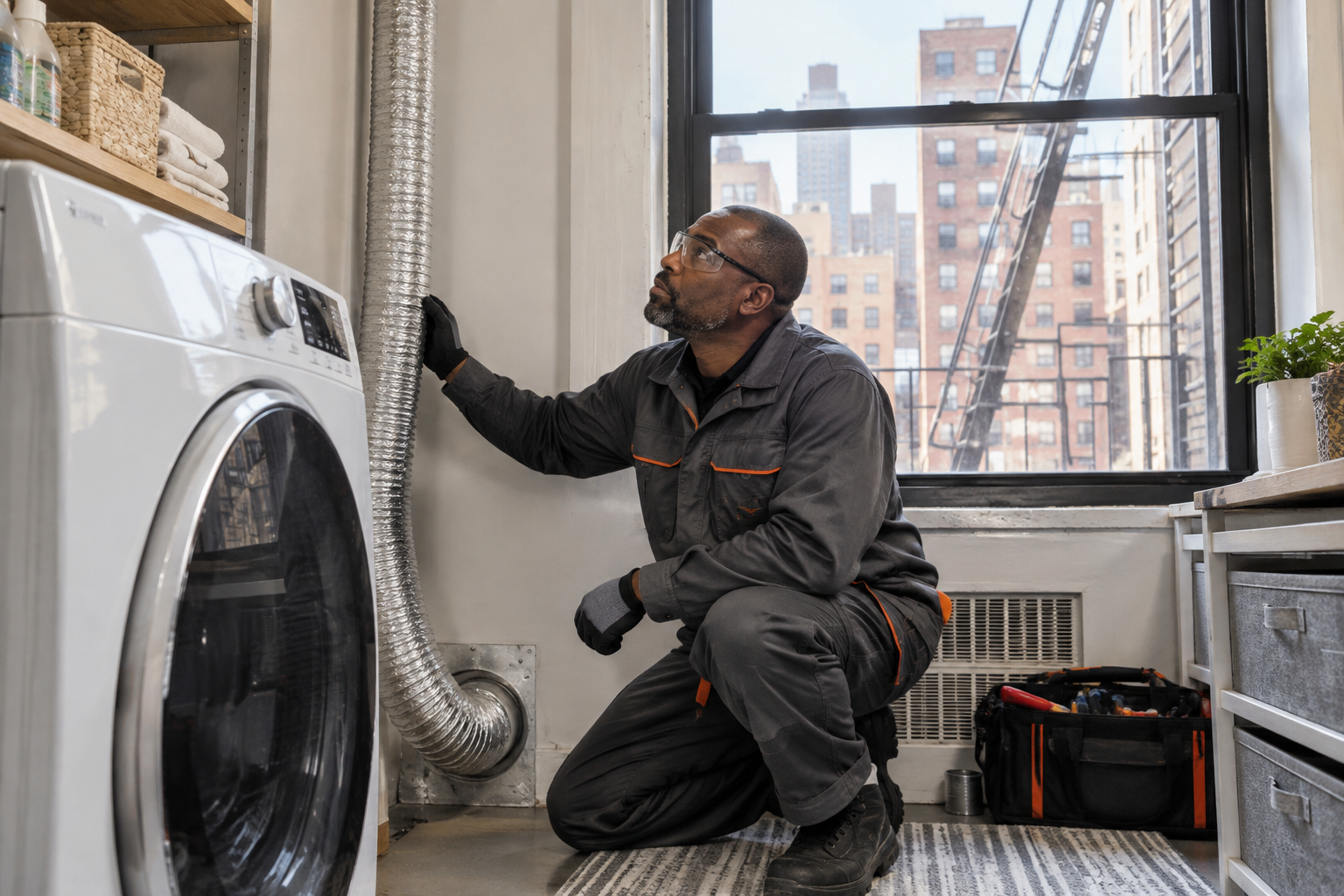
A Brooklyn homeowner moves into a recently renovated brownstone only to find the new laundry closet requires three hours to dry a single load of towels. The dryer is brand new, yet the laundry room is sweltering, and the wall behind the machine is damp. After an inspection, the culprit is found hidden behind the drywall: a ten-foot run of flexible foil tubing snaked through three sharp turns before reaching the exterior wall. This is a classic example of poor duct design that compromises both performance and safety.
Is your dryer struggling because of the machine itself or the path the air must take to escape? Does your current vent layout meet modern safety standards for length and turns? Can a professional reroute dryer vent systems in a finished NYC apartment without destroying the aesthetic of the home?
Optimizing the path of exhaust air is the most effective way to reduce mechanical strain, lower energy costs, and eliminate the primary cause of lint accumulation.
The Consequences of Bad Duct Design
In many dense residential settings across /manhattan and the surrounding boroughs, space is at a premium. Architects often prioritize the location of the laundry machines over the logistics of the exhaust path. When a vent installation is forced to travel long distances or navigate multiple ninety-degree bends, backpressure increases significantly. According to the U.S. Fire Administration, failure to clean dryer vents is a leading cause of home fires, but poor design can make even a clean vent dangerous by trapping lint in hard-to-reach elbows.
Bad design usually manifests as excessive length, the use of prohibited materials like plastic or foil slinky-style tubing, or venting into crawlspaces and attics rather than the building exterior. These flaws cause the dryer to overheat, shortening the lifespan of the heating element and thermal fuses. For those in /residential properties, a poorly routed vent also increases moisture levels indoors, potentially leading to mold growth within wall cavities. Our crews handle this daily across commercial.
When to Consider a Vent Reroute
Not every slow-drying issue requires a total overhaul, but specific structural red flags indicate that a reroute is necessary. If your ductwork exceeds 35 feet in total length—with deductions made for every turn—it likely violates standard building codes. In many older buildings in /brooklyn, vents were grandfathered in but no longer meet the demands of modern, high-capacity dryers. We see the same pattern on the jobs we run in Brooklyn.
Dryer vent problem? Talk to a technician today.
Professional rerouting aims to create the shortest, straightest path possible to the outside. This might involve moving the exit point from a roof to a side wall, or simply replacing jagged turns with long-sweep elbows that facilitate better movement. Once a path is corrected, technicians can perform airflow testing after dryer vent cleaning to ensure the new configuration meets the manufacturer’s specifications for exit velocity. Most of this work falls under our residential dryer vent cleaning service.
Professional Materials vs. DIY Shortcuts
Standard hardware store kits often rely on flexible materials that are prone to sagging and puncturing. A professional reroute dryer vent project utilizes rigid metal ducting with smooth interior walls. This reduces the friction that catches lint and allows the air to move freely. In high-traffic environments like /commercial laundromats or multi-family buildings, using the correct gauge of metal is essential for durability and fire containment.
Beyond the pipe itself, the termination point matters. Many NYC buildings have exterior vents that are blocked by years of paint or structural debris. Part of a reroute involves installing a proper high-flow wall cap that prevents pests and birds from entering the system while allowing lint to exit without obstruction.
Signs Your Vent Needs Rerouting
If you notice these patterns in your home or managed property, the current duct layout may be failing:
- The dryer cabinet is hot to the touch during a cycle.
- You must run the dryer for two or more cycles to get clothes dry.
- There is visible lint or moisture behind the dryer unit.
- The vent path includes more than two 90-degree turns before exiting the building.
- You live in a /queens renovation where the laundry was moved to a central closet far from an exterior wall.
Addressing these issues early prevents the costly replacement of dryer components and reduces the risk of a lint-fueled fire. DVC Experts Inc. brings 25+ years of experience to every project, ensuring that your laundry setup is both efficient and compliant with NYC standards. We serve Brooklyn, Queens, Manhattan, Long Island and the wider NYC area.
To schedule an inspection of your current ductwork or to discuss a reroute for your home or business, reach out to DVC Experts Inc. at 1 718-305-7888 or visit our /contact page for more information. Our team is located at 509 Dahill Rd, Brooklyn, NY 11218. Call DVC Experts at 1 718-305-7888 or request a quote and we will take a look.
Dryer vent problem? Talk to a technician today.
Related articles
- Moisture and Mold Risks from Obstructed Dryer Venting
- Choosing and Maintaining Dryer Vent Covers and Screens in NYC
- Dryer Vent vs. Air Duct Cleaning: Understanding the Difference
Need help at home? See our residential dryer vent cleaning.