
Troubleshooting
Handling Bird and Rodent Nests in NYC Dryer Vents
September 14, 2026
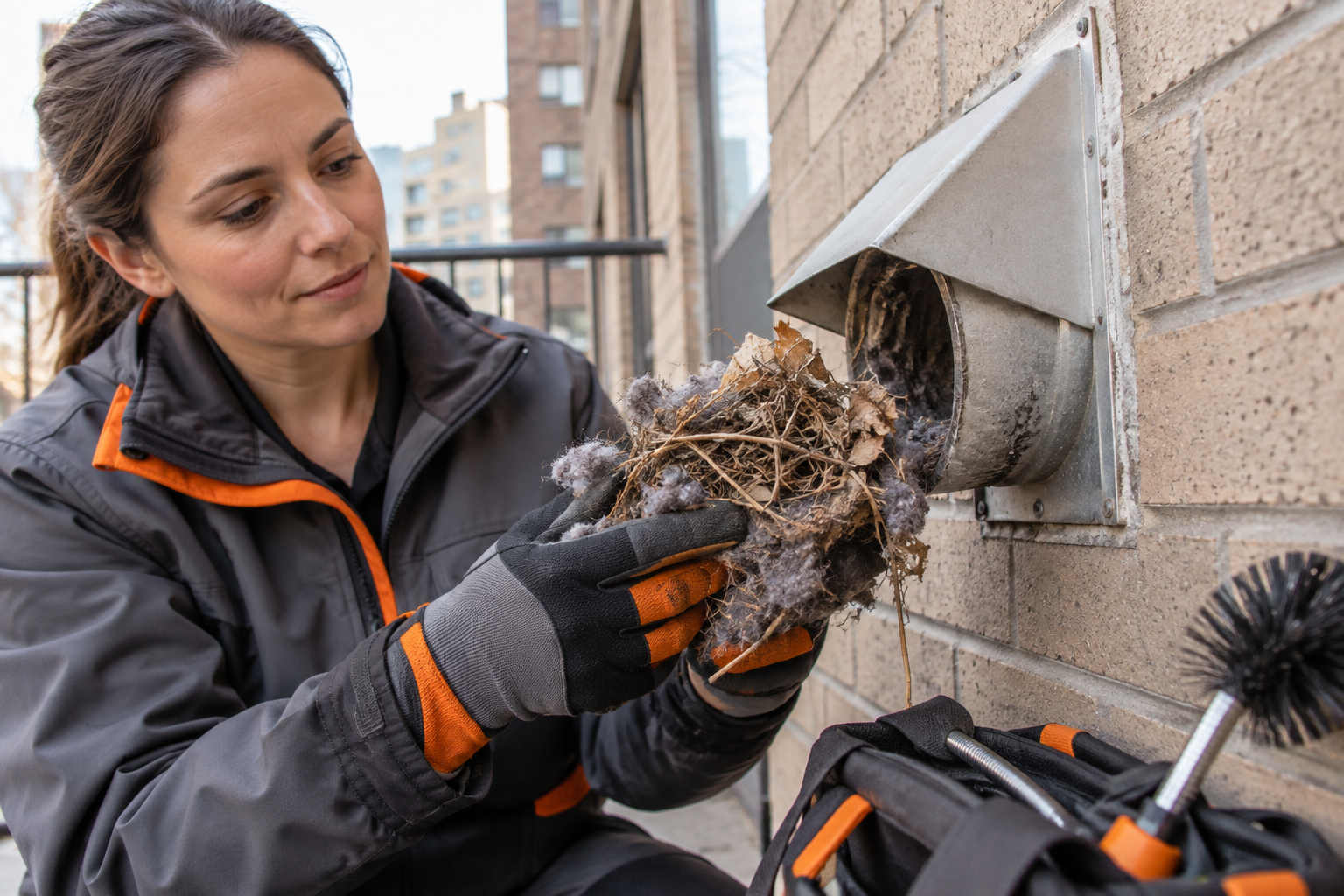
You are sitting in your Brooklyn brownstone or a Queens apartment when you notice a faint scratching sound coming from behind the laundry room wall. Perhaps you have also noticed that the dryer is taking two cycles to finish a load of towels, or there is a strange, earthy smell emanating from the drum. In many New York City buildings, these are not just signs of lint buildup; they are the primary indicators of a bird nest dryer vent or a rodent in dryer vent.
Are these blockages just a nuisance, or do they pose a legitimate risk to your property? How do you distinguish between a simple lint clog and an active pest infestation? What is the most effective way to clear the line and keep it clear?
A pest-related vent blockage creates a dual hazard of restricted airflow and highly flammable nesting material that requires immediate professional extraction to ensure safety.
Why NYC Vents Are Prime Real Estate for Pests
In the dense urban environment of Manhattan and Long Island, wildlife like starlings, sparrows, and mice are constantly seeking warm, sheltered locations. A dryer vent provides the ideal environment. It is elevated, protected from the elements, and offers a consistent source of heat during the colder months.
Unlike standard lint accumulation, which happens gradually, a bird nest dryer vent can appear almost overnight during the spring nesting season. Birds often choose the horizontal runs of ducting found in residential multi-family buildings. Rodents, on the other hand, may enter through ground-level vents or gaps in the building facade, bringing in nesting materials like paper, dried grass, and insulation. These materials are significantly more flammable than cotton lint, increasing the risk of a dryer-related fire.
The Dangers of Vent Blockage Pests
When a bird or rodent in dryer vent settles in, the primary concern is the total obstruction of airflow. According to the U.S. Fire Administration, failure to clean dryer vents is a leading cause of home clothes dryer fires. When a nest blocks the exhaust, the heat generated by the appliance has nowhere to go. This causes the internal temperature of the dryer to spike, which can ignite both the nesting material and the accumulated lint.
Dryer vent problem? Talk to a technician today.
Beyond the fire risk, there are health and mechanical concerns. Pests carry parasites and pathogens that can be circulated into the living space through small leaks in the ductwork. Furthermore, the backpressure caused by a blockage forces the dryer’s motor to work harder, leading to premature mechanical failure and higher utility bills. If you live in a managed property, these issues can quickly spread across shared duct systems in commercial or co-op settings. We see the same pattern on the jobs we run in Brooklyn. We see the same pattern on the jobs we run in Queens. For related background, read Determining Proper Dryer Vent Cleaning Frequency for NYC Apartments.
Identifying the Signs of Infestation
It is important to recognize the specific signs of a pest-related blockage before attempting any repairs. Because many NYC vents are routed through soffits or high up on exterior walls, a visual inspection of the terminal cap is often the first step.
Look for these red flags:
- Visible Debris: Straw, twigs, or plastic scraps sticking out of the exterior vent flap.
- Damaged Vent Covers: Flaps that are missing, stuck open, or show signs of being gnawed.
- Audible Cues: Chirping or scratching sounds coming from the ductwork while the dryer is off.
- Persistent Odors: A foul smell, often indicating droppings or, in unfortunate cases, a deceased animal inside the line.
If you see these signs, do not continue to run the dryer. The heat can be fatal to the animals and increases the immediate risk of combustion.
Prevention and Maintenance Framework
Clearing a nest is only half the battle; preventing a recurrence is essential for long-term safety. Standard plastic vent covers are easily bypassed by determined rodents. We recommend a structured approach to pest-proofing your ventilation system:
- Inspect Exterior Terminations: Check that all vent hoods have functional, self-closing flaps. In areas with high pest activity, consider installing heavy-duty, pest-resistant metal bird guards.
- Clear the Entire Line: Ensure that the cleaning process removes not just the nest, but all associated debris and pheromones that might attract other animals.
- Seal Gaps: Look for openings where the duct passes through exterior walls and seal them with appropriate masonry or caulking materials.
- Schedule Annual Checks: Regular inspections can catch a nesting attempt before it becomes a full blockage.
At DVC Experts Inc., we have 25+ years of experience navigating the complex ductwork of NYC’s high-rises and historic homes. We understand the specific challenges posed by local wildlife and the structural nuances of the city’s architecture.
If you suspect a vent blockage or need an inspection for your home or business in Brooklyn, Queens, Manhattan, or Long Island, contact us for professional assistance. Call DVC Experts at 1 718-305-7888 or request a quote and we will take a look.
Phone: 1 718-305-7888 Address: 509 Dahill Rd, Brooklyn, NY 11218
Dryer vent problem? Talk to a technician today.
Related articles
- Why a Dryer Smells Burnt or Musty
- Identifying the Real Causes of Lint Buildup and Dryer Fires
- Dryer Vent Cleaning for NYC Building Crews
Need help at home? See our residential dryer vent cleaning.