
Advice
Dryer Vent Safety for NYC Vacation Rentals
October 13, 2026
A property owner in a historic Brooklyn neighborhood recently discovered that their short-term rental guests were running the dryer four times a day to keep up with heavy towel rotations and bedding swaps. Between the back-to-back bookings, no one noticed the laundry room getting progressively hotter or the faint smell of scorched fabric. By the time a guest complained that the machine was taking three hours to finish a single load, the exhaust system was nearly entirely blocked with a dense wall of lint.
How does high-occupancy turnover accelerate lint accumulation compared to a standard residence? Who is liable if a fire occurs due to poor maintenance in a managed unit? What specific steps can hosts take to ensure their appliances remain safe for transient users?
Managing a high-turnover rental in New York City requires a more aggressive dryer vent maintenance schedule than a traditional home to account for heavy usage and varying guest behavior.
The Impact of High-Volume Laundry on Exhaust Systems
In a typical household, a dryer might run three to five times a week. In a short-term rental or a corporate housing unit in Manhattan, that same machine might run three times a day. Guests often wash large, lint-heavy loads including beach towels, heavy comforters, and thick bath mats. This volume of fabric significantly increases the amount of lint bypassed by the internal trap and pushed into the wall cavity.
When laundry is processed at this scale, the residential venting system undergoes stress it wasn't necessarily designed for. Unlike permanent residents who might notice a slow decline in performance, temporary guests are unlikely to report a dryer that takes slightly too long to dry. They simply restart the machine, further overheating the motor and increasing the risk of a lint ignition. Constant operation without adequate cooling periods between cycles can lead to thermal switch failures, especially if the airflow is restricted by years of neglected buildup.
Guest Neglect and Hidden Fire Hazards
One of the greatest challenges for NYC property managers is the lack of control over how guests use appliances. Some guests may not know they need to clear the lint trap after every load, while others might overload the drum, forcing lint deeper into the exhaust pipe. According to the U.S. Fire Administration, failure to clean the dryer is the leading cause of home clothes dryer fires. In a high-density Brooklyn brownstone or a multi-unit complex, a fire originating in one unit's laundry closet poses a severe risk to all neighboring residents.
Dryer vent problem? Talk to a technician today.
Property owners often face unique structural hurdles, such as long duct runs through masonry walls or transitions into narrow utility chases. Navigating these obstacles requires specialized tools to ensure the entire length of the pipe is clear. For those dealing with particularly cramped layouts, understanding Dryer Vent Access in NYC Tight Spaces is critical for maintaining safety without damaging the surrounding cabinetry or walls. Regular professional intervention ensures that even the most difficult-to-reach sections of the ductwork are free of debris.
Commercial-Grade Standards for Residential Units
Because vacation rentals operate more like a hospitality business than a private home, the maintenance approach should shift toward commercial standards. This means moving away from the "once a year" rule of thumb and instead scheduling inspections based on occupancy rates or machine run-time. A dryer vent in a unit with 90% occupancy may require cleaning every six months to prevent the backup of hot air and carbon monoxide, particularly in gas-powered units.
Implementing a robust maintenance plan also protects the longevity of the appliance. Dryers are expensive to replace in NYC, where delivery and installation often involve navigating narrow stairwells or freight elevator bookings. By ensuring the dryer vent is clear, the motor runs cooler and the heating element lasts longer, reducing the overhead costs for the property owner. Whether you are managing a single condo in Queens or a portfolio of luxury rentals, proactive care is the most cost-effective way to avoid emergency repairs and potential liability.
Short-Term Rental Maintenance Checklist
- Post Clear Instructions: Place a permanent sign above the dryer instructing guests to clean the lint trap before every single load.
- Monitor Dry Times: Check the drying efficiency during every turnover. If a standard load of towels is still damp after 45 minutes, the vent likely needs attention.
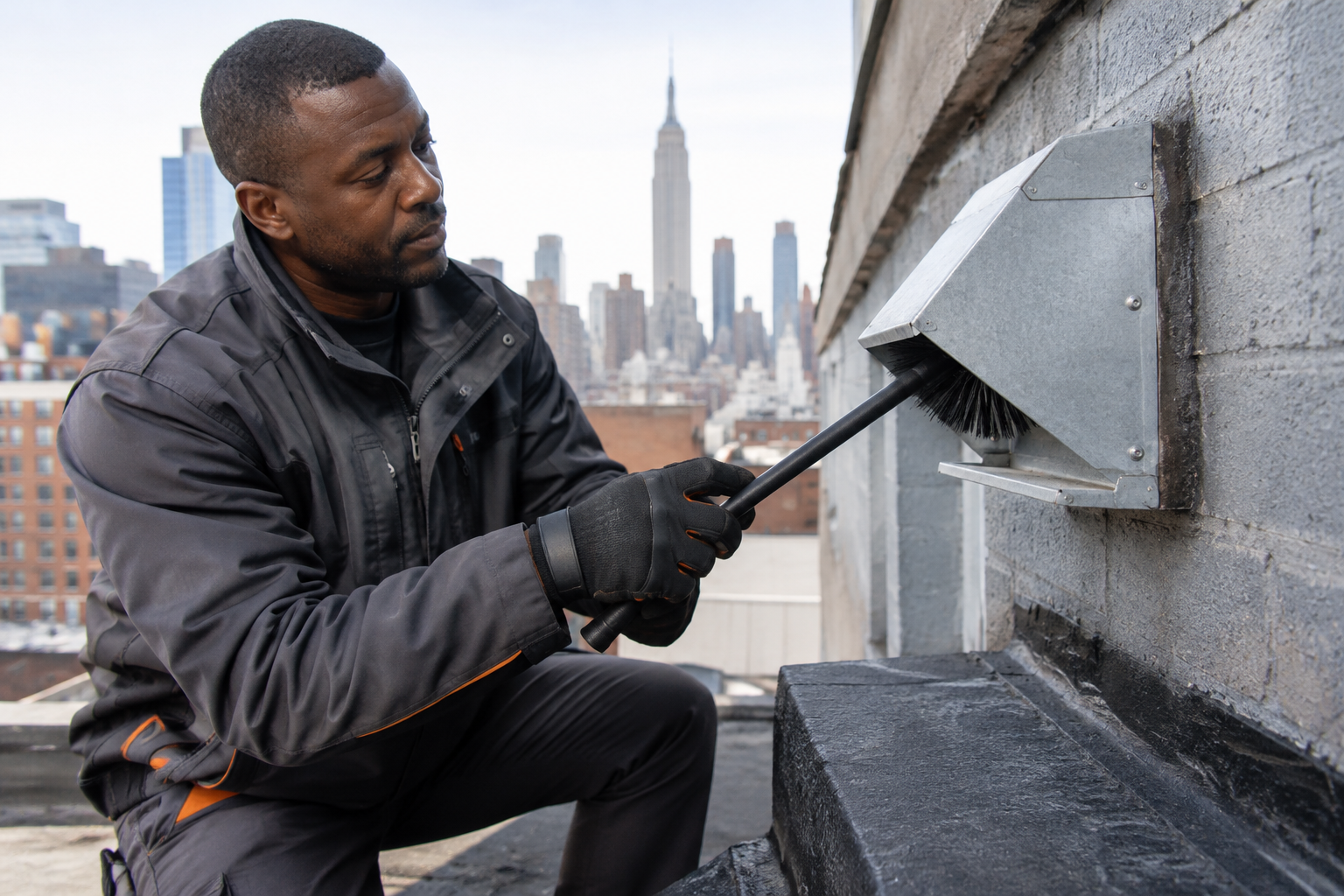
- Inspect Exterior Hoods: Ensure the outside flap or wall vent is opening fully when the machine is on and isn't blocked by neighborhood debris.
- Log Your Cleanings: Keep a record of professional dryer vent cleaning NYC services to demonstrate due diligence for insurance and building management purposes.
- Check Transitions: Ensure the flexible hose behind the dryer isn't crushed against the wall, which is a common issue when guests or cleaning crews push the machine back too hard.
Maintaining a safe rental environment requires staying ahead of the lint. DVC Experts Inc. brings 25+ years of experience to every job, serving residential and commercial clients across the five boroughs and Long Island. To schedule an inspection or cleaning for your property, contact our team today. Call DVC Experts Inc. at 1 718-305-7888.
Dryer vent problem? Talk to a technician today.
Related articles
- Dryer Vent Cleaning for NYC New Parents
- Dryer Vent Cleaning for NYC Building Crews
- Dryer Vent vs. Air Duct Cleaning: Understanding the Difference
Need help at home? See our residential dryer vent cleaning.