
Troubleshooting
Why Your Dryer Takes Two Cycles to Dry One Load
September 12, 2026
You set your dryer to a standard 45-minute cycle, yet when the buzzer sounds, your towels are still heavy and damp. In a Brooklyn brownstone or a Manhattan high-rise, this often leads to a second or even third cycle, wasting hours of your evening and significantly increasing your utility costs. This is not just a minor inconvenience; it is a sign that the appliance is struggling to breathe.
Is it the heating element failing, or is the moisture simply unable to escape the building? Why does a machine that worked perfectly last year now require double the time? How does the unique architecture of New York City venting systems contribute to this slowdown?
When a dryer takes two cycles to dry clothes, the primary cause is almost always restricted airflow preventing the escape of moisture-laden air.
The Physics of Slow Drying
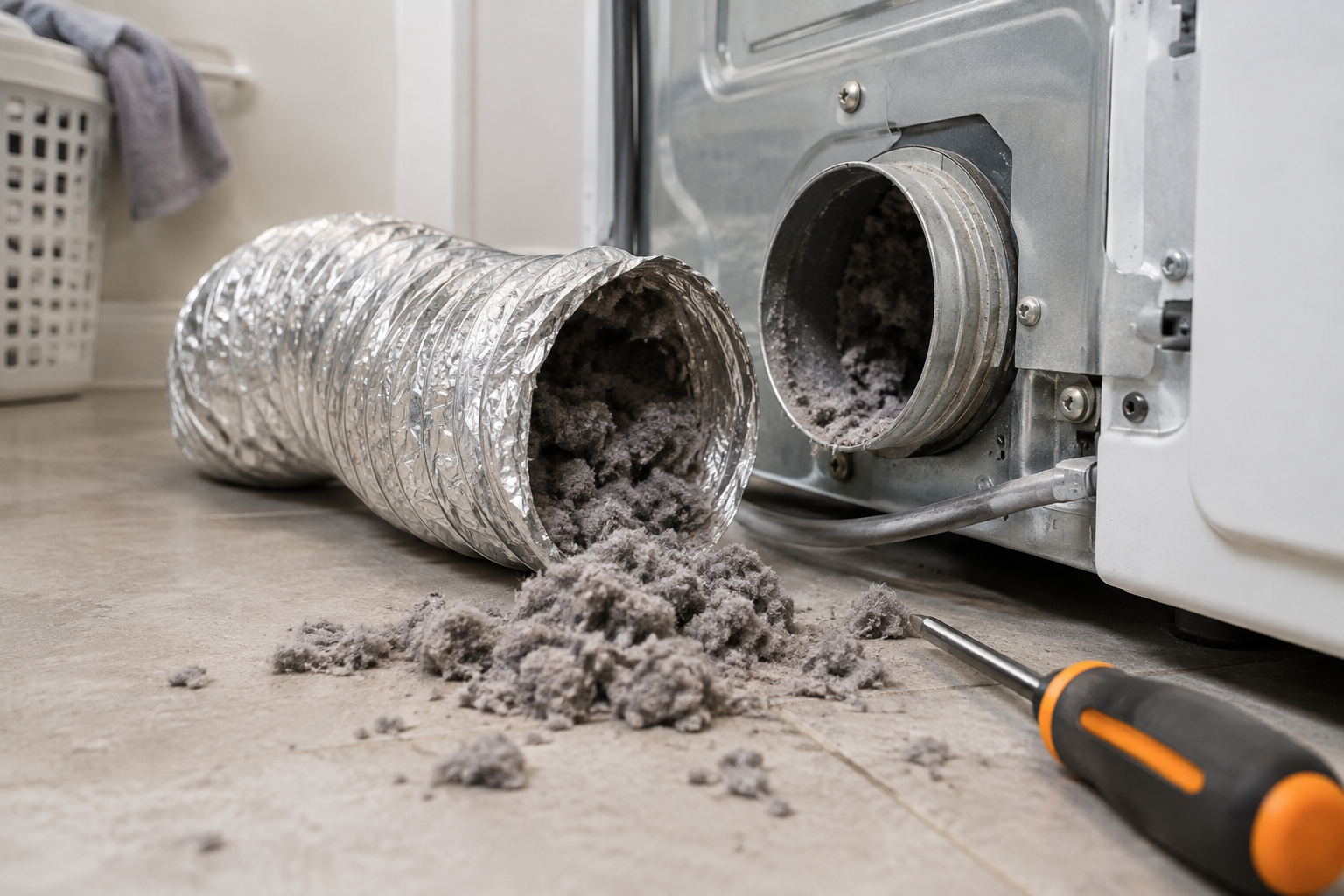
A dryer works by circulating heated air through the drum to evaporate water from the fabric. This hot, moist air must then be pushed out of the machine through the exhaust vent. If the vent is clogged with lint, the damp air has nowhere to go. Instead of exiting the building, the moisture remains trapped in the drum, keeping the clothes wet regardless of how hot the heating element gets.
In the dense residential landscape of NYC, vents often travel long distances through walls and ceilings to reach an exterior exhaust point. Every turn or elbow in that ductwork creates a point where lint can accumulate. When the path is narrowed by debris, the dryer's blower fan cannot overcome the backpressure, leading to the dreaded "clothes still damp" scenario.
NYC Architectural Challenges
Unlike suburban homes where a dryer vent may only travel three feet through an exterior wall, NYC residential setups are often complex. In older brownstones, vents may be routed through defunct chimneys or extended across several rooms. In modern high-rises, you may be dealing with a vertical stack that relies on specific pressure balances.
Dryer vent problem? Talk to a technician today.
When a dryer takes two cycles in these environments, the issue is frequently found in the hidden sections of the ductwork. Over time, the heavy humidity of the exhaust causes lint to become paste-like, sticking to the interior walls of the pipe. This reduces a four-inch opening to two inches or less, forcing the machine to work twice as hard to move the same volume of air.
The Hidden Risks of Repeated Cycles
Running multiple cycles is more than a waste of time. According to the U.S. Fire Administration, failure to clean dryer vents is the leading cause of home clothes dryer fires. When air cannot flow freely, heat builds up within the cabinet of the machine. This can cause the internal high-limit thermostat to trip, or worse, ignite the lint that has accumulated near the heating element. We see the same pattern on the jobs we run in Brooklyn. We see the same pattern on the jobs we run in Manhattan. For related background, read Determining Proper Dryer Vent Cleaning Frequency for NYC Apartments.
Furthermore, the mechanical components of your dryer—the belt, the motor, and the rollers—are designed for specific run times. By doubling the cycles, you are effectively cutting the lifespan of your appliance in half. The cost of increased electricity and eventual mechanical repair far outweighs the cost of maintaining clear pathways.
Troubleshooting Your Airflow
If you are experiencing slow drying, you can perform a basic assessment before seeking professional help. Check the following points to identify the restriction:
- External Exit Point: Locate where the air leaves your building. If the louvers or the mesh screen are covered in lint, clear them immediately.
- Transition Hose: Inspect the flexible duct behind the dryer. If it is crushed against the wall, it acts like a kinked garden hose, stopping all airflow.
- Internal Lint Screen: Ensure the screen is cleaned after every single load. A thin film of fabric softener residue can also coat these screens; scrubbing them with a brush and soapy water can sometimes improve flow.
- Heat Check: Feel the exhaust vent while the dryer is running. The air should be moving with significant force and should feel warm and moist. If the air is hot but barely moving, the blockage is deep in the duct.
For property managers and those overseeing commercial laundry facilities, these symptoms are often exacerbated by high-volume usage, requiring a more rigorous maintenance schedule to prevent equipment downtime.
When to Call a Professional
If the transition hose is clear and the lint filter is clean, but the dryer still takes two cycles, the blockage is likely within the structural walls of the building. DVC Experts Inc. has over 25 years of experience navigating the complex venting systems found in Brooklyn, Queens, Manhattan, and Long Island.
Attempting to clear long, winding ducts with consumer-grade brushes often results in the brush becoming stuck or the lint being compacted further. We use industrial-grade agitation tools and high-volume vacuum systems to ensure the entire length of the duct is restored to its original diameter.
To restore your dryer’s efficiency and ensure the safety of your home, contact DVC Experts Inc. at 1 718-305-7888. We are located at 509 Dahill Rd, Brooklyn, NY 11218, and serve the entire NYC area. Call DVC Experts at 1 718-305-7888 or request a quote and we will take a look.
Can a clogged dryer vent make my dryer take longer?
Yes. When lint restricts the dryer vent, moist air cannot leave the system properly and clothes may stay damp after a cycle. A vent inspection helps determine whether the system needs cleaning or replacement.
Arrange a home dryer vent visit
Book a dryer vent cleaning for your home, or read about our work in Brooklyn and Manhattan, the areas discussed in this article. Tell us about your vent route and drying symptoms when you request a visit.
Dryer vent problem? Talk to a technician today.
Related articles
- Why Your Dryer is Overheating and Shutting Off Mid-Cycle
- Dryer Venting in Condos and Co-ops: Determining Responsibility
- Warning Signs of a Clogged Dryer Vent in NYC Properties
Need help at home? See our residential dryer vent cleaning.