
Safety
Warning Signs of a Clogged Dryer Vent in NYC Properties
September 11, 2026
You are in your laundry room or kitchen corner in a Brooklyn brownstone, and the dryer has just finished a full seventy-minute cycle. You open the door, expecting warm, dry towels, but instead find a heavy, damp pile of laundry that smells faintly of mildew. You restart the cycle for another forty minutes, assuming the load was just too large, but the results remain the same.
Are you ignoring a failing appliance, or is the infrastructure behind the wall the real culprit? How do you distinguish between a mechanical breakdown and a simple lack of airflow? Most importantly, when does a nuisance become a legitimate fire risk?
Recognizing the physical warning signs of a clogged dryer vent is the only way to prevent mechanical failure and reduce the risk of a residential structure fire.
Why Clothes Take Multiple Cycles to Dry
The most common indicator of a dryer vent blocked by lint is the need for multiple cycles to dry a single load. A dryer functions by circulating hot air through the drum and then exhausting that moisture-laden air through a vent line to the building's exterior.
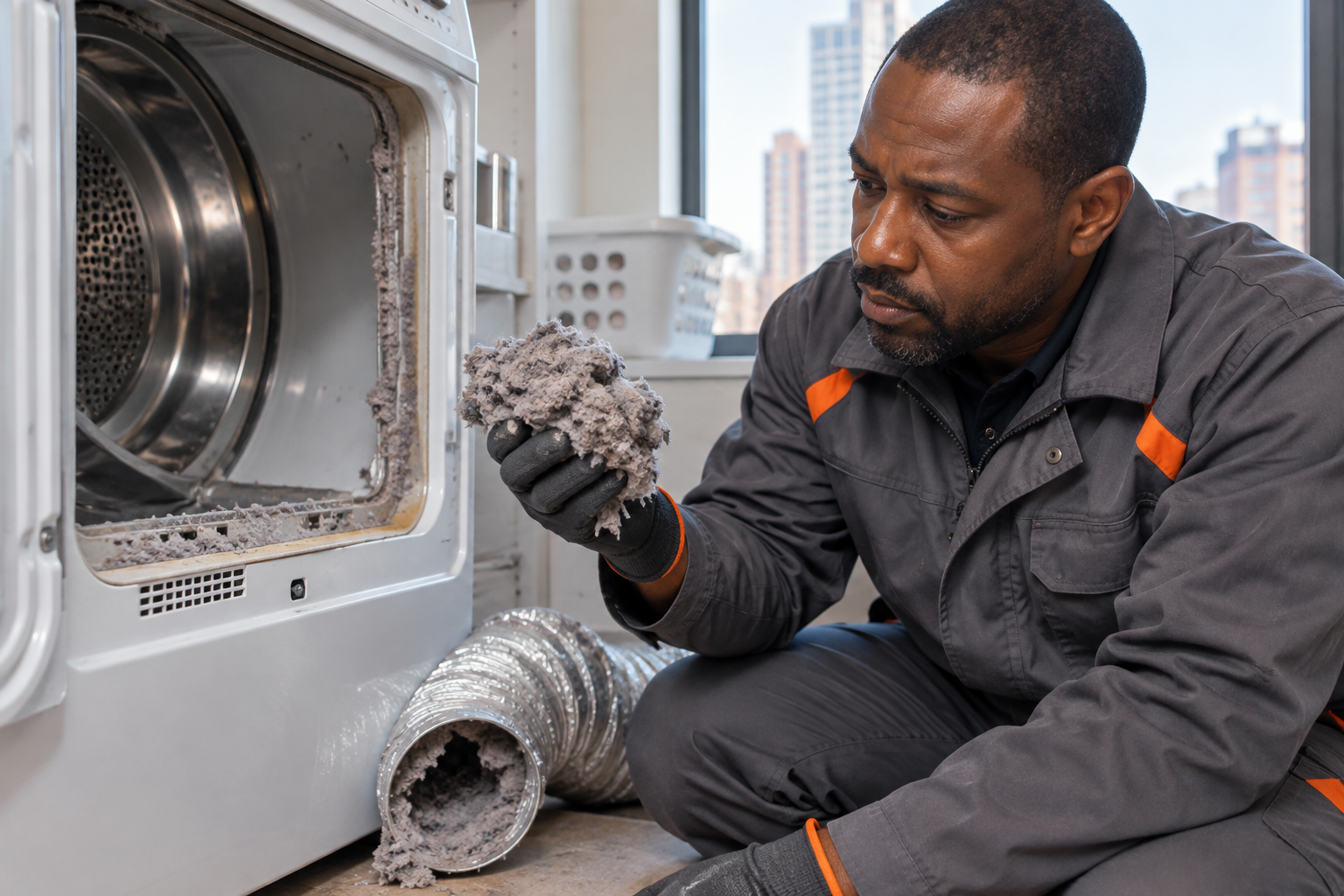
When lint accumulates within the ductwork, it restricts this airflow. The damp air has nowhere to go, so it remains in the drum with the clothing. This forces the dryer to work significantly harder and run longer. In high-rise apartments or co-ops where vent runs can be exceptionally long, even a partial blockage can halt efficiency entirely. If you find yourself consistently setting the timer for double the usual duration, the vent is likely the bottleneck.
Excessive Heat in the Laundry Area
If the laundry room feels unusually humid or the top of the dryer is hot to the touch, the exhaust system is likely compromised. Modern dryers are designed to push heat out of the building. When a vent is obstructed, that heat backs up into the appliance and radiates into the surrounding room.
Dryer vent problem? Talk to a technician today.
According to the U.S. Fire Administration, failure to clean the dryer vent is the leading cause of dryer fires. The internal components of the machine, including the heating element and the drum seal, are not designed to withstand the sustained, extreme temperatures caused by a blockage. Over time, this heat can cause the dryer’s internal thermostat to trip or, in worse cases, ignite the highly flammable lint trapped within the machine or the ducts. If the clothes coming out of the machine feel hot enough to burn your hands, or if the metal buttons and zippers are scorching, you are seeing critical clogged dryer vent signs.
The Appearance of Debris and Odors
A visual inspection of the exterior vent cover can often confirm your suspicions. If the flaps on the exterior wall or roof vent do not open fully when the dryer is running, air is not flowing at the required velocity. You may also see lint collecting around the edges of the vent hood or on the ground below it. We see the same pattern on the jobs we run in Brooklyn. For related background, read Determining Proper Dryer Vent Cleaning Frequency for NYC Apartments.
Inside the home, look for a musty or burning smell. A musty odor indicates that damp lint is sitting in the ductwork, unable to dry out between loads. A burning smell is an emergency indicator that lint is getting hot enough to singe. In these instances, the appliance should be shut off immediately until a professional inspection can be performed. Residents in managed portfolios should report these odors to building maintenance immediately to prevent issues from spreading through shared duct stacks.
The Cost of Ignoring the Signs
Ignoring a dryer not drying properly leads to three specific financial burdens. First, there is the immediate spike in utility bills. Running a dryer for two hours instead of forty-five minutes significantly increases electricity or gas consumption. Second, the lifespan of the appliance is shortened. The motor and heating elements wear out prematurely when forced to run under high-stress conditions.
Finally, there is the cost of potential property damage. In NYC apartments and condos, a vent fire can cause extensive smoke damage that impacts neighboring units. Regular maintenance is a preventative measure that avoids these compounding expenses. At DVC Experts Inc., we have seen how 25+ years of experience in the NYC area helps property owners identify these risks before they result in equipment loss.
Checklist: Is Your Dryer Vent Blocked?
If you are unsure whether your system requires service, use this checklist to evaluate your appliance's performance:
- Drying Time: Does a standard load of towels take longer than 50 minutes to dry?
- Surface Temperature: Is the top of the machine or the laundry room uncomfortably hot?
- Lint Accumulation: Do you see lint collecting behind the dryer or around the outdoor vent opening?
- Odor: Is there a noticeable burning or musty smell during operation?
- Flap Movement: When the dryer is on, do the exterior vent flaps remain closed or only partially open?
If you checked more than two boxes, your ventilation system likely requires a professional cleaning to restore safe airflow. DVC Experts Inc. provides comprehensive cleaning for residential and commercial clients across Brooklyn, Queens, Manhattan, and Long Island.
To ensure your home or business is safe and your appliance is running efficiently, contact the team with over two decades of local experience. Reach DVC Experts Inc. at 1 718-305-7888 or visit our office at 509 Dahill Rd, Brooklyn, NY 11218. You can also learn more about our specialized equipment and methods online. Call DVC Experts at 1 718-305-7888 or request a quote and we will take a look.
Dryer vent problem? Talk to a technician today.
Related articles
- Why Your Dryer Takes Two Cycles to Dry One Load
- Dryer Venting in Condos and Co-ops: Determining Responsibility
- Dryer Vent Access in NYC Tight Spaces
Need help at home? See our residential dryer vent cleaning.