
Troubleshooting
Why Your Dryer is Overheating and Shutting Off Mid-Cycle
September 28, 2026
You are halfway through a laundry load in your Brooklyn brownstone when the dryer suddenly cuts out. The machine is hot to the touch, the clothes are damp, and it refuses to restart for at least thirty minutes. In the tight confines of a New York City apartment, this is more than a minor inconvenience; it is a sign that the appliance's safety systems are responding to a critical failure in heat management.
Is the dryer motor failing, or is the ventilation system restricted? Why does the machine work again after it cools down, and is it safe to keep using it?
A dryer that shuts off mid-cycle is almost always reacting to a thermal overload caused by restricted airflow.
The Role of the Thermal Fuse and High-Limit Thermostat
Modern dryers are equipped with safety devices designed to prevent fires. The most common cause for a sudden shutdown is the thermal fuse or the high-limit thermostat. When the internal temperature of the drum exceeds a safe threshold, these sensors break the electrical circuit to stop the heating element or the motor.
If your dryer has a resettable thermostat, it may restart once the unit cools. However, if the thermal fuse blows, the dryer will not turn back on at all until the fuse is replaced by a technician. This safety mechanism is the last line of defense against the high temperatures that lead to appliance fires. According to the U.S. Fire Administration, failure to clean dryer vents is the leading cause of dryer fires in residential buildings. Residents in high-density areas like /manhattan must be particularly vigilant, as a fire in one unit can quickly impact the entire building.
Why Restricted Airflow Causes Overheating
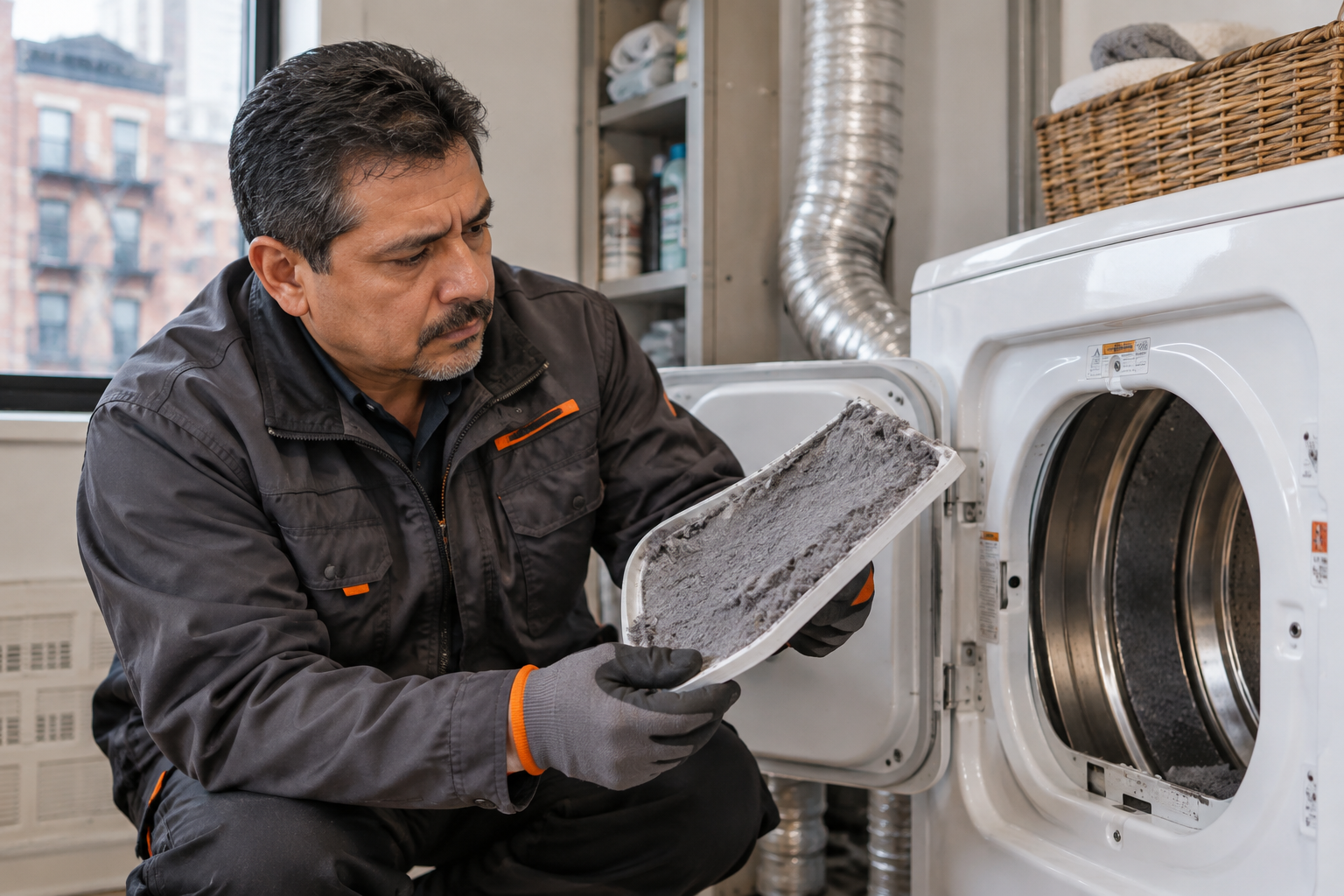
Dryers rely on a continuous exchange of air. The heating element warms the air, which then absorbs moisture from the clothes. This hot, moist air must be pushed out through the exhaust vent. When the vent is clogged with lint, the hot air has nowhere to go. It backs up into the dryer cabinet, causing the internal components to reach dangerous temperatures.
Dryer vent problem? Talk to a technician today.
This restriction often leads to the appliance running longer than necessary. As we noted in our discussion on why a clogged dryer vent drives up energy bills in NYC, the extra strain on the heating element not only wastes electricity but also accelerates the wear and tear on the thermal sensors. Over time, the repeated cycling of a high-limit thermostat will lead to a total component failure.
Identifying the Source of the Blockage
In many /residential settings, the blockage is not located within the dryer itself but within the wall-mounted ductwork. NYC buildings often feature long, winding vent paths to reach an exterior wall. These turns provide perfect traps for wet lint to accumulate.
Common locations for these blockages include:
- The transition duct (the flexible hose behind the machine) becoming crushed against the wall.
- The exterior vent hood being stuck closed by debris or paint.
- Lint buildup at the secondary lint trap or booster fan in high-rise apartments.
- Nests or outdoor debris blocking the exit point in /brooklyn homes with ground-level exhausts.
Diagnostic Checklist for Overheating Dryers
If your dryer shuts off mid-cycle, use the following framework to determine your next steps:
- Check the External Exhaust: While the dryer is running, go outside and feel the air coming out of the vent. It should be a strong, warm breeze. If the airflow is weak or nonexistent, the duct is blocked.
- Inspect the Transition Duct: Pull the dryer out and ensure the flexible foil or plastic duct isn't kinked. Replacing a plastic duct with a semi-rigid metal duct can often improve safety.
- Clean the Lint Screen: A clogged screen restricts air before it even enters the ductwork. Wash the screen with soap and water if you use dryer sheets, as they can leave an invisible film.
- Monitor Dry Times: If a load that used to take 45 minutes now takes 90, the dryer is overheating and struggling to vent moisture.
Continuing to run a dryer that frequently shuts off is a significant fire risk and will eventually burn out the motor or the heating element. For owners of /commercial laundromats or multi-family properties, this downtime results in lost revenue and increased repair costs across the portfolio.
Professional Ventilation Maintenance
DVC Experts Inc. has over 25 years of experience resolving complex ventilation issues in the NYC area. We specialize in locating blockages in the hard-to-reach ductwork common in local architecture. If your dryer is overheating or shutting down prematurely, it requires a professional inspection to ensure the vent is clear and the appliance is safe to operate.
For service in Manhattan, Brooklyn, Queens, and Long Island, contact DVC Experts Inc. at 1 718-305-7888 or visit our /contact page to schedule a technician visit at your property.
Dryer vent problem? Talk to a technician today.
Related articles
- Why Your Dryer Takes Two Cycles to Dry One Load
- Warning Signs of a Clogged Dryer Vent in NYC Properties
- Landlord Responsibilities for Dryer Vents in New York
Need help at home? See our residential dryer vent cleaning.