
How it works
Roof Dryer Vents in NYC Buildings: What to Know
October 8, 2026
A load of towels goes in on the fourth floor of a Manhattan co-op. An hour later the towels are still damp, the laundry closet feels warm, and the dryer has started cutting out before the cycle ends. The appliance is fine. The problem is at the other end of the vent, up on the roof.
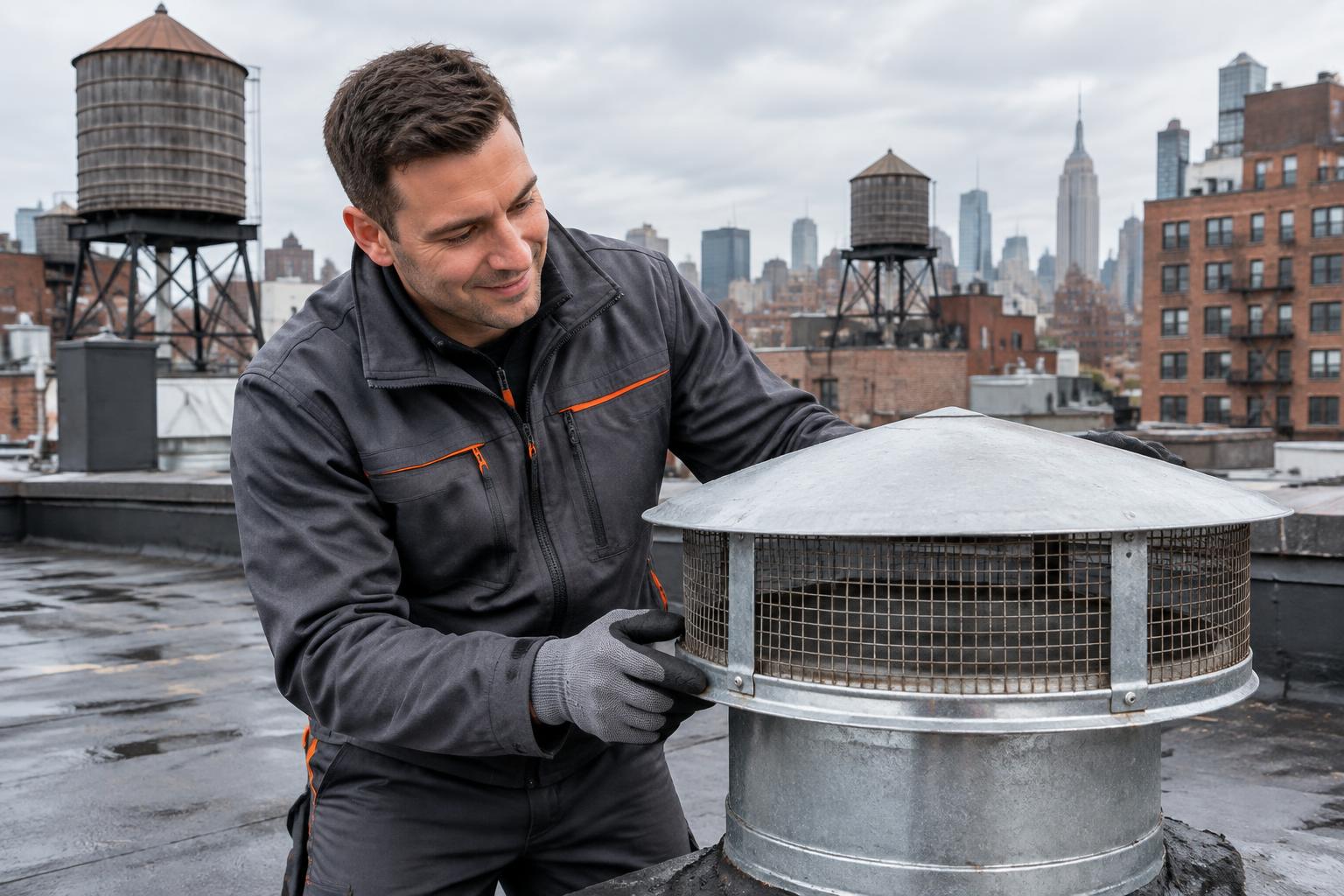
Roof dryer vents are common across NYC. Mid-rise walk-ups, co-ops, condo towers and plenty of row houses send dryer exhaust up and out through the roof instead of through a side wall. That arrangement makes sense when there is no outside wall near the laundry area, but it brings its own maintenance questions. Who can get to the roof? How do you know the cap is clear? And why does a vent that worked fine last year suddenly struggle?
A roof termination is not harder to maintain than a wall vent, but it is easier to forget, because nobody sees it.
If you are weighing how a roof exit compares with a side-wall exit, see our guide to roof vent vs wall vent cleaning differences.
Why roof dryer vents clog
Long vertical runs
A wall vent in a single-family home might run only a short distance from the dryer to the outside. A roof vent in an apartment building often climbs several floors before it reaches open air. The dryer's blower has to push warm, damp air a long way up, and every extra foot and every bend adds resistance. If you want the background on how distance and turns affect airflow, our guide to dryer vent length limits and duct elbows covers it in plain terms.
Lint settling in the duct
As exhaust air travels upward it slows down and cools. Lint that would have been blown straight out of a short wall vent has more chances to drop out of the air stream and settle along the inside of the duct, especially at joints and horizontal sections before the vertical climb. Over time that layer narrows the duct, which slows the air further and lets even more lint settle.
Bird nests, screens and caps
Roof caps are a natural spot for birds looking for a warm, sheltered place to nest. Some caps have screens or guards to keep animals out, but a fine screen can also catch lint and close up from the outside. Either way the result is the same: the exit is partly or fully blocked, and moist air backs up toward the dryer. Our article on bird and rodent nests in NYC dryer vents goes into more detail.
Signs a roof vent needs attention
Because you cannot see a roof cap from the laundry room, you usually have to read the signs from the dryer side:
Dryer vent problem? Talk to a technician today.
- Clothes regularly need a second cycle to dry.
- The dryer, or the room around it, feels unusually hot during a run.
- The dryer shuts off partway through a cycle.
- There is a burning smell when the dryer is running.
- Lint collects around the dryer door or behind the machine.
Any one of these is worth a look. Several together usually point to a restricted vent rather than a failing appliance.
Rooftop access means coordinating with the super
On most NYC buildings the roof is not open to residents. Access usually runs through the super, the managing agent or the board, and there may be a locked bulkhead door, a hatch or a ladder involved. That is why roof vent work goes most smoothly when the building is part of the plan from the start.
If you live in an apartment, let your super know before a visit so roof access can be arranged. If you manage a building, it often makes sense to look at several units on the same stack in one visit rather than one at a time. Our commercial and multi-family dryer vent service is built around working with property managers and supers on exactly this kind of scheduling.
How DVC Experts handles roof vents
DVC Experts Inc. has more than 25 years of experience with dryer vents in Brooklyn, Manhattan, Queens, the Bronx, Staten Island and Long Island. On a roof vent job the process is the same careful sequence we follow everywhere:
- Inspect. We look at the dryer connection, the route the duct takes and the condition of the roof cap and any screen or guard.
- Clean. We clean the system thoroughly with our specialized equipment, clearing lint and debris from the run and the termination.
- Confirm. We check that the vent is working properly again, so the dryer is pushing air out freely.
If the inspection shows a crushed, disconnected or badly routed section, we will explain what we found and whether repair or replacement makes sense. When a run needs to be rebuilt, our dryer vent installation and replacement service covers planning the route and installing the new duct. Every visit ends with an invoice detailing all work performed.
A quick checklist for roof vents
- Do you know where your dryer vent exits the building?
- Has the roof cap been checked since the last cleaning?
- Does your super know a visit is coming, and can they arrange roof access?
- Are clothes taking longer to dry than they used to?
If you answered "no" or "not sure" to the first three, or "yes" to the last, it is time to have the vent looked at. For a closer comparison of the two common exit points, see roof vent vs. wall vent cleaning.
Roof vents do their job quietly for a long time, which is exactly why they get overlooked. A little coordination with your building and a regular check from the dryer side to the cap keeps them working the way they should. Call DVC Experts at 1 718-305-7888 or request a quote, and tell us the vent goes through the roof so we can plan access with your super.
Dryer vent problem? Talk to a technician today.
Related articles
- Roof Vent vs. Wall Vent: Why Termination Point Matters for Cleaning
- Choosing and Maintaining Dryer Vent Covers and Screens in NYC
- Verifying Performance: How Airflow is Tested After Dryer Vent Cleaning
Managing a building or laundromat? See our commercial dryer vent cleaning.